
Synopsis: Cars are not just transport but also mobile living spaces.
I suggest it is real that car ownership is under threat, and this matters a lot for quality of life. EVs may play a key role in keeping car ownership alive into the future.
The main reason car ownership matters even if there are other transport solutions, is that cars are more than just transport:
- Cars are mobile personal living spaces, and an extension, or sometimes even an alternative, to the home as a living space.
- Our accessories are what make us human and owning a car gives the owner extra abilities that humans would have at one time considered superpowers.
The key is that a car is a form of mobile personal living space, which is one reason why people typically the more people spend on their home, the more they also spend on their car.
A person who commutes to work in their car, or even partially commutes to work in their car has a level of personal space during their time in the car that they won’t have on public transport. Parents sometimes find the time they spend with their children in the car as some of the best bonding time.
The personal vehicle as a personal living space.
It’s not only about getting from A to B.
Alternatives such as robotaxis/”transport as a service” and public transport compare their cost to the cost of car ownership, but there is more to the story. All owners of private planes are most likely aware that it would be cheaper to use commercial flights. Most people can’t afford their own private planes, but in developed countries most can afford their own private cars. At least, they can in 2024, and hopefully this will still be the case in the future.
Conditions during travel matter as travel time is part of our lives.
We spend part of lives travelling. If travel was instant, then only cost would matter, but the longer the period of time travel takes, the more important the conditions during travel become. The longer the flight, the greater the benefit from flying first class. The cars we own end up being the places we spend more time than almost anywhere else.

A car is like a moveable part of a home.
Consider the layout of your home. There are common shared spaces and bedrooms which offer increased privacy.
Most modern homes also include spaces for vehicles, which can be considered as rooms that can be moved away from the home.
Some vehicles are mostly family vehicles, whilst others are more private spaces, particularly as children first grow into adults.
Cars are not only for travel.
To provide an example of the role of cars as personal space, consider that a survey in 2016 found that 14% of Americans lost their virginity in a car, and 60% people surveyed had previously had sex in a car.
“Sex and cars have gone together since the car was invented,” USD psychologist and study leader Dr. Cindy Struckman-Johnson said in a press release.
How Many People Lose Their Virginity In The Car?
Most likely, in most cases the cars were not being used as transport at the time people were losing their virginity. Although I suggest that data supports the concept of the car as personal space, it is just one example, and the concept of personal space is far more general. Often when young people get their first car, it can for them be more their own space than their own bedroom at home in house of their parents can ever be fully their own space.
Car or truck: Personal vehicles and what’s in a name?
Many people now prefer to describe their personal vehicle as not a car but a truck.
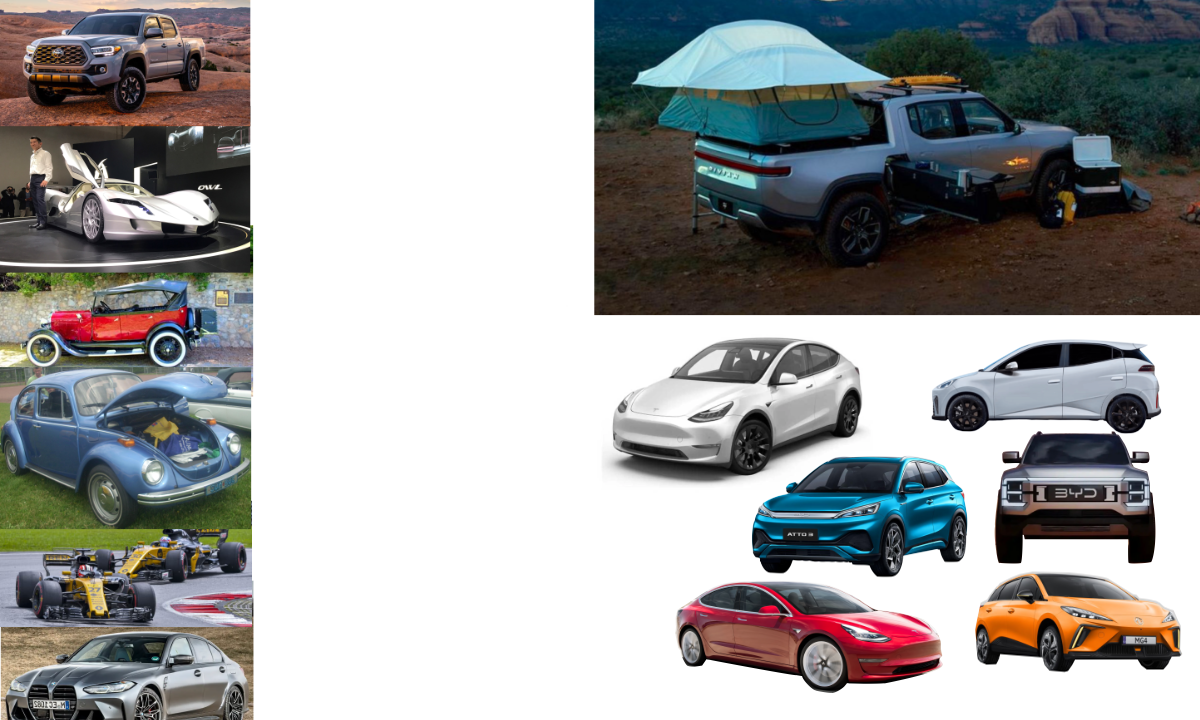
I suggest that the term “car” can be used to include not just sports-cars, racing-cars, sedans and hatchbacks, but also SUVs and pickups/Utes, and in fact any vehicle where that vehicle is used for private activities of the vehicle owner, the owner’s friends and family, and the possessions of the owner their friends and family.
I prefer to use the word car to be inclusive this way, partly because always saying “car/truck” just gets painful, and because truck also sounds like it also includes delivery vans, 18 wheelers, and other purely commercial vehicles. As quoted below, the word ‘truck’ is also used to describe a category of vehicles very different to personal vehicles. I could every time say “car/personal truck” and maybe that could be clearer, but it just gets quite long. Another alternative is “personal-vehicle”, but it is still long, can then sound like it includes bicycles even though it is not my intention to include them, and sounds like forced “politically correct speak”.
I do not think the goal of people using the word “truck” to describe their personal vehicle is in order to force politically correct labels, so please, when I say “car” accept that I do include all “personal-vehicles” such as pickup-trucks, Utes, SUVs, 4WDs, hatchbacks and sedans, but just do not want to need to list them all.
Yes, I know some people might feel offended and say: “I don’t own a car, I own a truck!”, but as there is no one word to describe “cars and trucks owned for purposes that include being used as a car”, please excuse me just using the word “car”.
A car or automobile is a motor vehicle with wheels. Most definitions of cars say that they run primarily on roads, seat one to eight people, have four wheels, and mainly transport people, not cargo.
Wikipedia: car.
A truck or lorry is a motor vehicle designed to transport cargo, carry specialized payloads, or perform other utilitarian work.
Wikipedia: Truck.
Battling the anti-car campaigns.
Can EVs help fight the anti-car campaigns? The answer is “partly”.
There are two voices against cars:
- emissions.
- the push for higher density living in cities.
EVs only help combat one type of anti-car voice: emissions.
I would argue all humans could drive fossil-fuelled ICE vehicles if the world population was sufficiently lower than 1 billion, as with sufficiently less people, even driving fossil fuelled cars if clean enough may not have too much impact on CO2 levels.
However, the world has over 8 billion people, and on that basis, the only way to keep having cars, is to transition to EVs. Provided we also transition to clean energy grids, it would mean “use case emissions” are reduced to just tyres and brake dust, and even brake dust can be reduced by regenerative braking. There would still be build emissions, but there is work to make building cars carbon neutral too. Animals have never been carbon neutral, but in the right ration to plants which are carbon negative, the Earth has managed with animals so far.
But answering vehicle emissions problems does not solve those intent on ever denser cities and moving further towards a “farmed human” dystopia. That battle still remains.
Why the push for ever denser populations within in cities?
Cynically, it could be suggested that the motivation is to line the pockets of property developers and financial institutions. Idealistically it would be house population increases driven by refugee intakes instead of workers and consumers lured by “people farming” into economically motivated immigration away from the countries that funded their education and may have even more need for those same workers.
We live in a world past the point of “peak child” and where all projections are for population growth to end, yet many cities have planning for never ending growth. Perhaps the growth of cities is needed due to the decline in rural populations in areas where land should not command such high premiums.
Governments not incessantly lobbied by property developers could possibly be more focused on ensuring the survival of smaller communities and provide paths to “affordable housing” that do not require shrinking the size of the house provided by the developers and assisting buyer fund ever higher mortgages so they can afford the ever-increasing prices of the smaller apartments and multiple occupancy developments. But then, perhaps if the focus was on housing that was affordable because it did not cost more, then it would rob governments of a source of economic growth and stop people being able to feel wealthier without while owning the same home and thus in some ways, no more wealth than before despite increased prices. But maybe that is too cynical?
Will it ever get to go as far as “people don’t need their own home?”
Probably not, or at least “not quite”. Some do suggest the future is micro homes, and that owning anything else is wasteful and won’t allow the world to support the population of consumer big business plans together with enough of other life for the planet to survive.
A very influential lobby successfully maintains policies that make housing density increase in areas where property developers can earn the greatest profits and drive-up housing prices so that financial institutions can also maximise their revenue even when the end result there are areas where homelessness is out of control and even young professionals cannot afford housing while other areas are driven to become ghost towns even though many people should now be able to work from anywhere.
Who has said: We don’t need to own our own cars?
Tony Seba.
I have a lot of respect for Tony Seba, so when he says something, I believe it needs very serious consideration.
“The day that we get level four, autonomous technology ready and approved by regulators, when that converges with on-demand, and electric transportation we will get what we call transportation as a service (TAAS).”
Seba says EV longevity and autonomy will cause global new car sales to plunge 75%
“Some call it Robo taxi. Essentially, when that happens the cost per mile of transportation is going to drop by anywhere from 10 to 20 times.”
“So even if gasoline automakers gave away their cars, that’s still gonna be a lot more expensive than the cost of transport as a service.”
“So for most people who can barely pay their bills, it won’t make any sense to own a car,” said Seba.
“Do I spend $50,000 over the next five years to own a car? Or do I pay $100 a month for a subscription to transportation as a service?”
A big question here, is what percentage of people are expected to fit into the “can barely pay their bills” category, and what are these bills they can barely pay? While it may be true that most people fit into the category of “can barely pay their bills”, hopefully it is not true that these bills are for all just covering the minimum possible for survival and some of their costs included leisure and enjoying life. If this is the case, just maybe, for some of them, their car is not just transport, but part of their leisure and enjoying life.
Elon Musk.
I find Elon Musk an enigma. And his “fun police” position on EVs is another example. Consider his “master plan 3” presentation:
- Elon Musk states “fewer vehicles will be needed, at least passenger vehicles, with autonomy”, clearly indicating a future where people don’t people need to own cars.
- Despite his desire to increase global population, he states we will move from 2 million ICEVs to only 1.4 million EVs, which implies over 30% of people who own a car today will be left without a car.
Now, reality is, those numbers on reduced car numbers don’t add up, without a huge increase in the number of cars sent to the scrap heap. The math is 85 million vehicles sold per year, which means it would take 23.5 years to have built the 2 billion vehicles estimated to be out there, and thus vehicles last on average 23.5 years, which is not too far from reality, but it also means replacing all current cars would take another 23.5 years, and by 2023 be less than 1/3rd complete.
Given cars normally do last 20 years, the only way the number of cars on the road would fall by 30% from 2 billion to 1.4 billion as stated in the video within 7 years, would be either if new cars sales are banned completely for those 7 years, or people just start scrapping vehicles that are working perfectly without replacing their vehicle.
If there are 2 billion cars on the road in 2023, which granted is probably itself an overestimate, then at least 1.4 billion of those already on the road in 2023 would still be on the road in 2030. On current projections, in 2030, around 560,000 cars will be those purchased after 2023, and all other cars will be those purchased prior to 2023 and at that time 7 or more years old. Given Elon Musk seems to suggest new vehicle sales will remain at 85 million per year, then dropping to 1.4 billion would mean cars need to be designed to become obsolete in just 16 years in future, and last only 2/3 as long as current cars, which is not so great the for the environment. Overall, the maths does not seem as well researched as one would expect.
Overall, it seems quite strange for car ownership to fall so fast that people will be just abandoning fully functioning cars as scrap by 2030.
Updates.
- 2024 Feb 6 th : Fully revised 2nd edition replaced previous outdated head of topic page.