Topics and Subtopics.
All: EV Reference Information

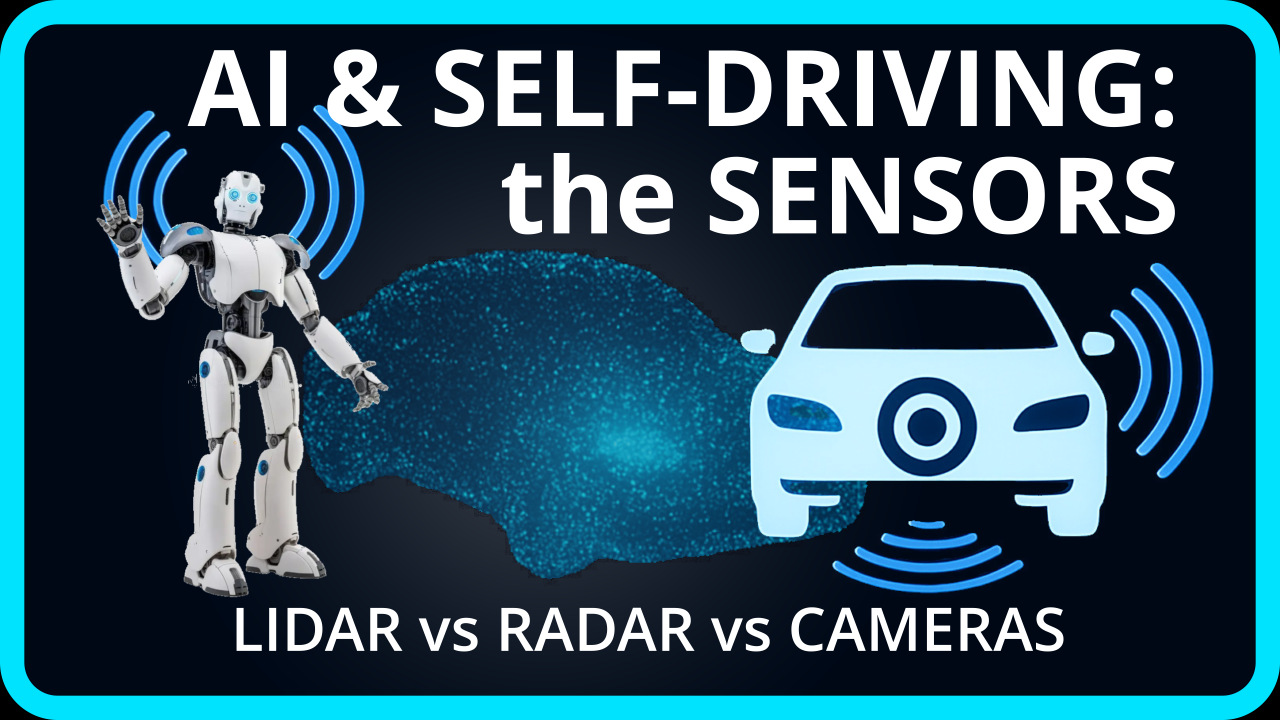
AI + Self-Driving Car Sensors Explained: LIDAR vs Radar, Cameras & Ultrasonic.

From the youtube description: Self-driving cars rely on more than just hype — they need sensors that can actually “see” the road. In this video, we break down the four key sensor types: LIDAR, radar, cameras, and sonar. You’ll learn the pros and cons of each technology, the myths surrounding LIDAR, and how these sensors shape the future of AI, robotics, and autonomous vehicles.

Whether you’re curious about Tesla’s approach, Waymo’s choices, or the broader race toward full autonomy, this guide gives you the foundation to understand what’s really going on behind the buzzwords.

Read More »

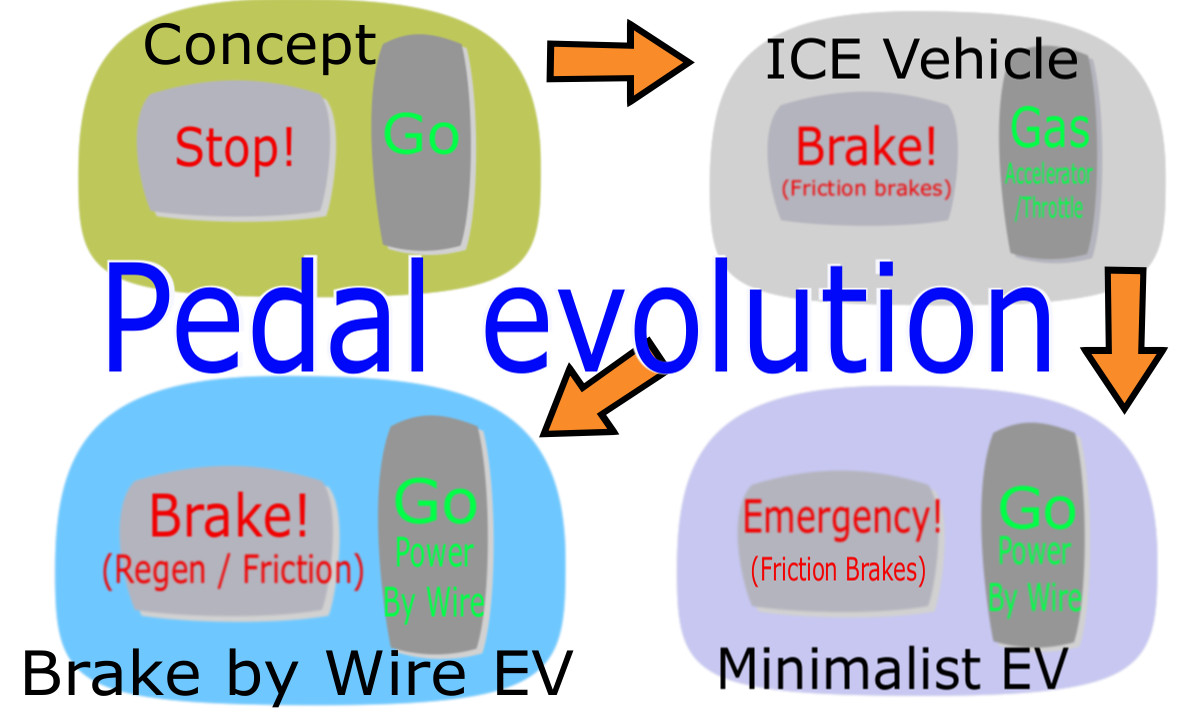
One pedal driving, lift-off regen and regen braking explained: reality, myths, hype, fads and Tesla vs the rest.

Update in progress.

To make sense of all the often seemingly conflicting information on “regen“, one-pedal-driving, and how to best drive an EV, it can really help to understand that in most EVs the regenerative braking is fully integrated into the braking system and the two different regen system in use in EVs can suit two very different driving styles:

  1. 1. Lift-off regen: In all EVs and like engine braking in an ICEV.
  2. 2. Brake-by-wire regen, an additional regen system in most EVs.

Confusion over these two systems is part of regen confusion, but there are many myths and so much misinformation about regen-braking, lift-off regen and one-pedal-driving including that “one-pedal-driving” is not the most efficient way of driving, and that the regen you feel from lift-off is not all the regen.

Despite the fact there is so many myths leading to so much misinformation making it sound complex, driving an EV for optimum efficiency is usually extremely simple.

Read More »

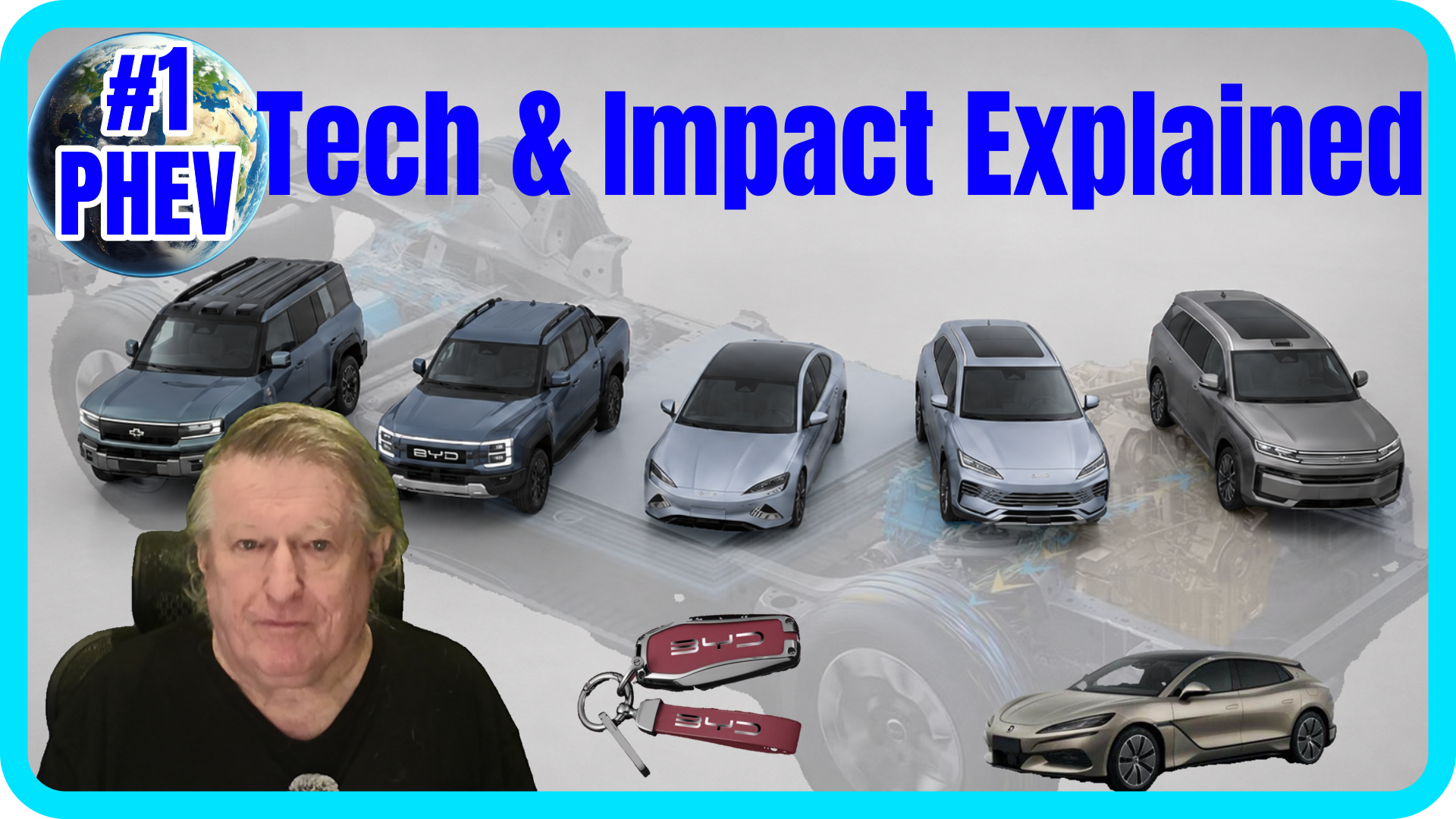
Why EV Battery size is not just about range, and the implications for hybrids.

When you look deeper, battery capacity of an EV matters far more than you might think, as it effects not just range, but also battery life and vehicle power.

If a battery is quite small, as is usually the case with a hybrid (HEV), and even most plug-in hybrids (PHEVs), there will be limited total distance that can be driven “emissions free” before battery degradation, which is why use of fossil fuels is a necessity for most hybrids.

Read More »

EV Literacy: EV tech, AC, DC and Electric Motors and other stuff that’s different.

For almost 100 years, people have grown up in an age of the internal combustion engine. For many people, this has meant an understanding of engine capacity, cylinders, spark plugs, engine compression, crankshafts, valves, turbochargers, exhausts etc.

The bad news is that EVs mean so much that previously learned literacy is about to be consigned to history and replaced by EV charging, EV Range, batteries, permanent magnet and induction motors, regen braking, and other new terms.

The good news is, it is easy to build an EV literacy on those ICEV foundations, so there is no need to feel illiterate in this new EV world.

Read More »

EV Battery swapping: Recharge or Refuel?

There is a full exploration of recharging electric vehicles on another page, but there is an a “refuelling” alternative to recharging: battery swapping.

With electrical appliances in the past, when the batteries went flat, we swapped them. Then rechargeable batteries became popular so we could avoid throwing out the old batteries, but I swap first and then recharge. It turns out, we can also do that with cars, and it is happening already.

Battery swapping, take only around 5 minutes, but so does recharging the latest batteries. Battery swapping will likely play a key role in the future, but not necessarily the role many expect.

Read More »

EV range: Anxieties vs realities & needs and the “real-world range” myth.

This is a look at range, covering from how no one number accurately describes an EV’s range and driving the full range of EV outside of emergencies just wastes time, through why range is so unlike that of fossil fuelled vehicles and optimising range is all about efficiency, through to what range a person needs around the town or for highway driving.

Range with EVs is such a different experience that novices can feel anxiety, despite that in practice running out of charge in EVs happens no more than ICE vehicles run out of gas. While EV range is getting closer to ICEV range, most EVs, unlike the Lightyear One pictured here, aren’t solar and most EVs still don’t match the range of internal combustion engine cars for highway driving, but the convenience of background charging means range with EVs is usually only a limitation on relatively rare road trips.

Read More »

EV Charging Reference: Not just the new Refuelling.

This page covers a lot. Charging equipment and what to install and how to charge at home, and charging on road trips, through to the technical side, and a look at wireless and the future of charging. Plus, how recharging requires a complete rethink from refuelling, and how charging can be more convenient and match the speed of refueling.

Public recharging infrastructure for EVs is growing but recharging at home will be most important for most people. Fully benefiting from having an EV, requires understanding, being prepared for recharging.

Read More »

EV Battery Reference: Basics, Technologies, Care & Benefits.

Batteries for EVs have progressed:

  • From: very expensive even while delivering an impractical range.
  • To: Less expensive with an acceptable range.

Only now in 2022, are batteries showing signs they can soon enable EVs price competitive and range competitive. With the new world of EVs, comes a whole new world of understanding cars, with batteries at the centre. This page provides background, the rethink batteries bring, the different battery technologies, though to how to car for batteries, and who makes what.

Read More »

EV Charging Systems: Reference

I have been exploring electric vehicles. What is needed to make them affordable, and what it is like to live with them. When exploring charging, the charging systems became so complex that I have extracted what I found as its own exploration, which I plan to keep updated as a reference. It currently does need an update for wireless charging, but some information can be found on my exploration of the logistics of charging.

Read More »

EV Range & Economy: Decoding the Numbers.

The key specification for EVs so far has been ‘range’. But how are the numbers measured, will range specific match reality, and can the number even be compared?

It turns out there are even 3 different standards for measuring range, and they give very different answers!

Further, why have we moved from ‘economy’ to ‘range’? Is there still even economy with EVs?

Read More »

EV Reference Information

EV Literacy: EV tech, AC, DC and Electric Motors and other stuff that’s different.

EV Literacy: EV tech, AC, DC and Electric Motors and other stuff that’s different.

For almost 100 years, people have grown up in an age of the internal combustion engine. For many people, this has meant an understanding of engine capacity, cylinders, spark plugs, engine compression, crankshafts, valves, turbochargers, exhausts etc.

The bad news is that EVs mean so much that previously learned literacy is about to be consigned to history and replaced by EV charging, EV Range, batteries, permanent magnet and induction motors, regen braking, and other new terms.

The good news is, it is easy to build an EV literacy on those ICEV foundations, so there is no need to feel illiterate in this new EV world.

Parent / Sub topics
2025: The future of cars, robotaxis & EVs. Will EVs die out, or eventually take over?

2025: The future of cars, robotaxis & EVs. Will EVs die out, or eventually take over?

This page (and the video) look at key questions on the future of cars & EVs: Will robotaxis mean really no one will want to own a car anymore? Even if people do still want cars, will EVs just die out or eventually take over? What about hydrogen, e-fuels, or the countries like the USA dropping any climate agenda? EV have improved a lot, but need to do more before they are fully suitable for _most_ people. If EVs & infrastructure are just not yet ready for most people, what's the next step?
Cars, Trucks & EVs: Can the EV save the car?

Cars, Trucks & EVs: Can the EV save the car?

This is the lead webpaper for all content related to personal vehicles, cars and trucks and their future. While most content is on the EVs and hybrids that I see as the future of transition of personal vehicles, the overall focus is on the future of car ownership. Many, even including Elon Musk, claim that in the future, people won't need to own a car. I suggest that sentiment misses that cars don't get gets us from A to B, but instead are places we spend the part of our lives while getting from A to B, and sometimes are even our home base when simply at B instead of A. In fact, a future where only the wealthy can own their own vehicles is heading towards the direction of reducing personal living space and "caged humans" where it could also be suggested "people won't need their own home". While site embraces moving to EVs, but no the agenda that EVs most be only ever smaller city cars, or better still just electric bicycles. EVs should allow the vehicles we want to own to be sustainable, that is provided we don't also succumb to living in cities that seek ever denser population densities.
Webpapers
AI + Self-Driving Car Sensors Explained: LIDAR vs Radar, Cameras & Ultrasonic.

AI + Self-Driving Car Sensors Explained: LIDAR vs Radar, Cameras & Ultrasonic.

EV Battery Reference: Basics, Technologies, Care & Benefits.

EV Battery Reference: Basics, Technologies, Care & Benefits.

Why EV Battery size is not just about range, and the implications for hybrids.

Why EV Battery size is not just about range, and the implications for hybrids.

One pedal driving, lift-off regen and regen braking explained: reality, myths, hype, fads and Tesla vs the rest.

One pedal driving, lift-off regen and regen braking explained: reality, myths, hype, fads and Tesla vs the rest.

EV Charging Reference: Not just the new Refuelling.

EV Charging Reference: Not just the new Refuelling.

EV Battery swapping: Recharge or Refuel?

EV Battery swapping: Recharge or Refuel?

EV range: Anxieties vs realities & needs and the “real-world range” myth.

EV range: Anxieties vs realities & needs and the “real-world range” myth.

EV Range & Economy: Decoding the Numbers.

EV Range & Economy: Decoding the Numbers.

EV Charging Systems: Reference

EV Charging Systems: Reference

Autonomous Cars: What’s needed for self-driving and are Lidar & Maps Fools-Gold

Autonomous Cars: What’s needed for self-driving and are Lidar & Maps Fools-Gold