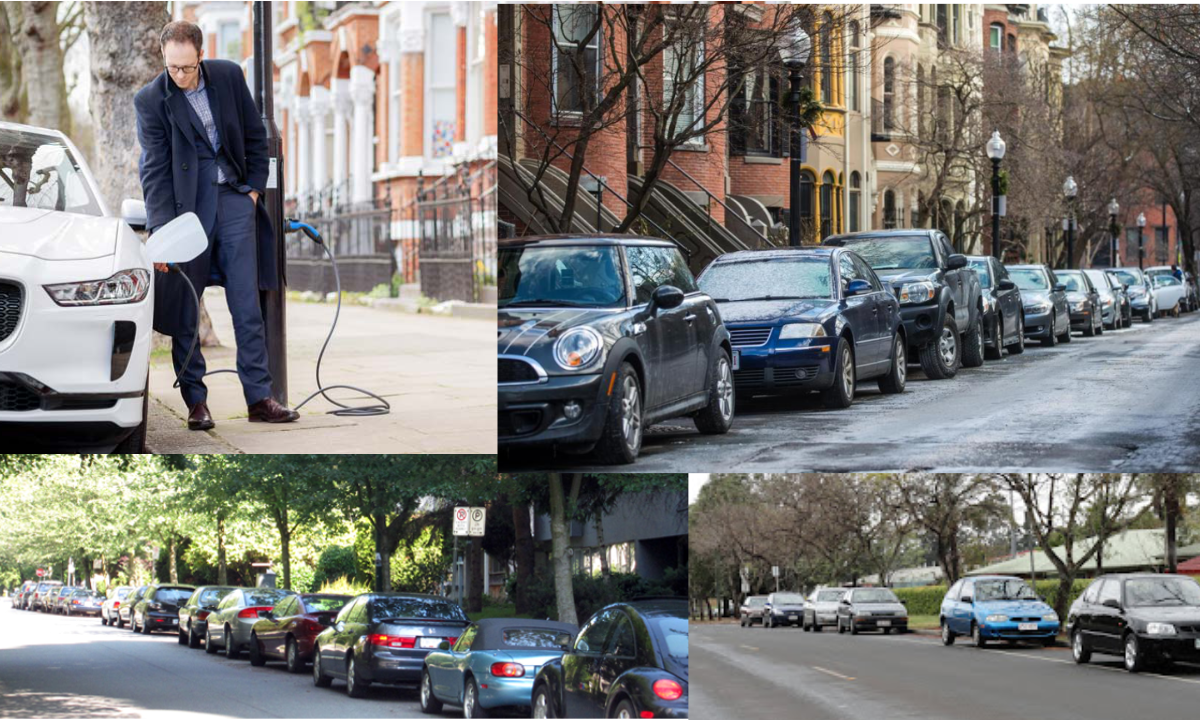
This page (and the video) look at key questions on the future of cars & EVs: Will robotaxis mean really no one will want to own a car anymore? Even if people do still want cars, will EVs just die out or eventually take over? What about hydrogen, e-fuels, or the countries like the USA dropping any climate agenda? EV have improved a lot, but need to do more before they are fully suitable for _most_ people. If EVs & infrastructure are just not yet ready for most people, what's the next step?

This is the lead webpaper for all content related to personal vehicles, cars and trucks and their future. While most content is on the EVs and hybrids that I see as the future of transition of personal vehicles, the overall focus is on the future of car ownership. Many, even including Elon Musk, claim that in the future, people won't need to own a car. I suggest that sentiment misses that cars don't get gets us from A to B, but instead are places we spend the part of our lives while getting from A to B, and sometimes are even our home base when simply at B instead of A. In fact, a future where only the wealthy can own their own vehicles is heading towards the direction of reducing personal living space and "caged humans" where it could also be suggested "people won't need their own home". While site embraces moving to EVs, but no the agenda that EVs most be only ever smaller city cars, or better still just electric bicycles. EVs should allow the vehicles we want to own to be sustainable, that is provided we don't also succumb to living in cities that seek ever denser population densities.

I just watched a video I found disturbing on CNN arguing the case that America is a better place than most American's believe. It was disturbing not because like everywhere else, the US has imperfections, or that America is a bad place, but because it felt like the commentor, and member of the press, was not focused on interests of the people of America but considered only commercial interests when evaluating the direction in which the country should be headed. In looking at the instincts of the free press even in a leading country like America, there may be valuable insights is to what is wrong across the planet.

It can seem all those tech companies are so dumb giving away services for free. I recently read another comment containing the "I don't want Google getting more of my data to sell" and it reminded me of the question, 'why is your data valuable?' people too rarely ask. The common myth is that Facebook and Google etc want your data so they can sell it, but even with companies that do sell your data, it still requires someone to turn data into money, and enough money to fund the "free" services of the tech companies and allow them enough spare to make profits beyond anything seen in the world previously. So how does the data turn into so much money? There is no such thing as a free lunch. Google and Facebook etc make their money from advertising, not from selling data, and unless they use can the data to persuade you to buy products at prices inflated by advertisers paying part of the sale price to Facebook/Google etc, they would lose money. Your data is used to inflate the cost of living and earn votes for politicians with an agenda that gives them a budget to spend. They (Google/Facebook etc) don't want to sell your data, but the reality, is more sinister: they use it to have to change your thinking, so more of your money will go to make them richer.

Claims that +1.5oC warming would be 'catastrophic', and that climate change represents an 'existential threat' can be quite vague as just what is 'catastrophic' or an 'existential threat'? This webpaper, seeks to translate 'catastrophic' outcomes and 'existential threats' into more concrete outcomes. "We recognise climate change is a serious problem and are committed to net zero by 2050 in order to prevent the disastrous consequences anticipated to occur by around 2026" Typical government position: Is it ok?