

Synopsis: AI universal robots are something complete different.
Up until the combination of AI and humanoid robots, every robot was essentially just another tool to allow humans to get more done.
AI introduces something completely new, described in the video as a new “species” which could even be considered a new but different form of life.
The big step with AI robots, is that just as AI can write an essay in a way previous preprogramed computers could not, AI gives robots the ability to learn, to solve problems, and in addition to what AI can do in the cloud, add tasks the require sight, hands and movement.
AI robots need not be humanoid, but as a somewhat human form allows using current tools, manipulating objects designed for humans and accessing places and things designed for humans, it is likely to be a popular form factor.
Robot Types.
Specialist robots are only automated tools designed for a specific task.


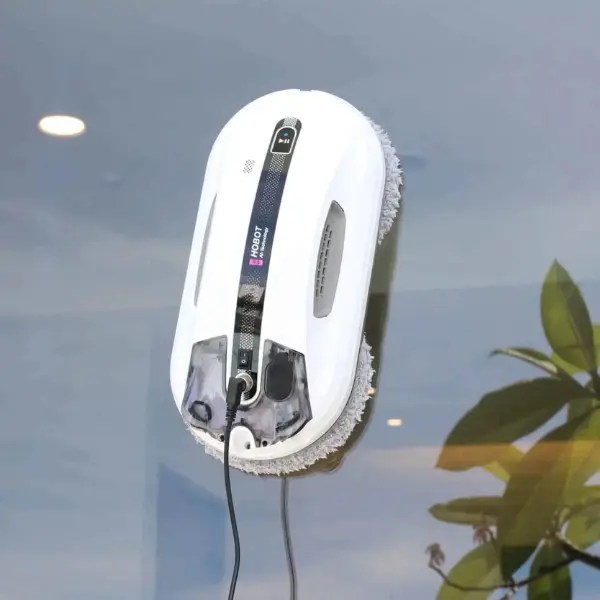


Robots in fiction date back to at least 1870, with the word robot dating to 1920.
Industrial robots date back to 1938, and more recently we have had robot vacuums, robot lawn mowers, and even robot baristas, but the key thing that makes this “task specialist” group of robots merely a minor evolution of automation that has been evolving over centuries, is that, just like previous tools, they are still limited to very specific tasks. In reality, none of these robots lives up to the fiction.
The top row of pictured “home robots” shows a vacuum cleaner, a lawn mower and a window cleaning robot. Each one is physically limited by its physical design to one single specialist task with each being effectively just robotic version of a single purpose tool. While each is in the same way differs from the design of the human operated version making for example, robot vacuum cleaners deferent from human operated vacuum cleaners, they still have same basic parts of a vacuum cleaner integrated into their design. Not even a complete change of software could ever make a robot vacuum clearer anything beyond a vacuum cleaner.
A feature of specialist robots are that tools for the specialist area are an integral part of the robot.
Industrial robots have integral tools that can be simpler to adapt to new slightly varied tasks, but without AI, they cannot be just shown new tasks, and instead require at least significant reprogramming, and quite often some hardware modification, in order to adapt to any variation in their role. Comparing the industrial factory robot in the above pictures to the barista robot in the last of those pictures, shows there is a lot in common, but the “hand” at the end of the arm is modified, and most significantly, very different programming is required to get a robot “arm” to complete each of these very different tasks.
Now imagine if the robot “arm” was an “AI robot arm” and had a vision system, voice interaction and access to the internet and could itself learn new tasks, then perhaps it could be then it could be asked, “learn how to make me a coffee”. However, that would be of little use if it could not itself get to the coffee machine, and by the time you add mobility, you have something similar to an AI humanoid robot or at least an AI robot dog.
Specialist robots: Specialists robot as just tools which can never complete the whole job.
Almost every job, or thing that needs to be done requires, from start to finish requires a broader set of skills than those of a specialist robot, and this relegates specialist robots to being tools that help someone get the job done, rather than taking over and doing the whole job.
Consider the full task of vacuuming, and the parts a robot vacuum can’t do. The entire job can include moving furniture, doing the edges and crevices, and getting the vacuumed dirt to the rubbish. While “self-emptying” robot vacuums transfer what they have vacuumed to a base station, those base stations still need emptying, just less often. While the robot vacuum can be programmed with a schedule, it can’t’ determine itself when vacuuming is necessary. It still needs periodic cleaning from hairs, can’t climb or vacuum stairs etc. Even in the very rare house where nothing ever has to be done to move or pick up things for a full vacuum, a robot vacuum still doesn’t do everything in the same way a human cleaner would compete every step required. Overall, owning a robot vacuum means less work, but the robot vacuum doesn’t not eliminate the entire whole job of vacuuming.
The closest I have to a fully “do the whole job” robot I have is robot lawn mower. It doesn’t need emptying, and while it can’t replace its own blades, the first set has already lasted a few years. As a robot, it is not very smart, but it doesn’t need to be. This is the type that needs a wire perimeter, so there was a significant initial setup, but since that initial set up, it has required very little intervention. It can be set to mow automatically, but it while it will park if it detects rain, it can’t pick the best time to mow in terms of the grass and ground being dry, and the lawn area being clear, so I tend to start it whenever the I feel the grass needs mowing. There are also two separate areas of grass to mow, with steps between them, the mower needs to be carried to that second area. The old mower has not been needed following the purchase of the robot mower, a little more edge trimming is needed then when a human does the mowing, but the main thing is that because the robot mower has no concept of the overall work of keeping the lawn mowed and can’t problem solve, in the end the while there is less work for the human, it is still the human that needs to ensure that the lawn is mowed.
Will AI humanoid robots make specialist task specific robots obsolete?


In theory, a humanoid robot could manually operate non-robotic equipment for each of the examples I have given as specialist robots, and the AI humanoid robot could then also be able to “do the whole job”. Unlike specialist robots, An AI robot is not limited to a specific function and can instead grasp the overall job to be completed and can even problem solve to ensure the work is complete.
This doesn’t mean specialist robots are redundant, as if the AI humanoid robot uses specialist robots like the robot mower to reduce how much time the humanoid robot need dedicate to the job of mowing the lawn, then it still can make sense to keep using the specialist robot lawn mower, even if an AI robot is “managing” the robot mower.
What the AI humanoid robot brings, is not a better way of doing what the specialist robot does, but the ability to do what previously still had to be done by humans.
AI humanoid robot revolution: It is AI + robots that changes the world.
A human form for the power of AI.
Several companies producing humanoid robots integrated with AI have begun field trials and are ramping up production.
While there have been online videos from Boston Dynamics showcasing advances in the physical movement of humanoid robots for some years now, it is only the combination of the advances in AI together with these advances in mechatronics brings the total transformation of robots.
Learning instead of programming, problem solving, tool use & able to complete jobs.
While specialist robots have to be programmed in order to even just move and require complex programming to deal with any new scenario, AI robots can learn. There is even an example of an AI robot that learnt how to make a coffee using a coffee machine, just by watching humans operate coffee machine.
Unlike humans, where every person has to learn, AI robots can instantly share with other robots what they have learnt. If there are one million similar robots that all spend 1 hour a day learning, that means each robot is benefiting from 1 million hours of learning every day.
With specialist robots, there is always work that the humans still have to do and the need for the humans to be able to adapt and problem solve. This creates a partnership between technology of specialist robots and humans. The big change is that while existing technology and specialist robots keep their role, AI humanoid robots take the role of human in the partnership.
Why the humanoid form?
If we could make robots look like anything, then why make them look like humans?
The answer comes from the partnership between technology and humans in getting thing dones.
The technology is designed to be compatible with humans, so if the robot takes the role of the human, it must also be compatible with existing technology, and thus take the form that is compatible with technology: human form.
Quadruped “robot dogs” a form factor with an AI future?


Is there a future for the quadruped “robot dog” if we can make bipedal human robots?
I suggest possible “yes”, depending on whether people would rather have a domestic companion in “dog” quadruped form, or “human” biped form.
A robot in dog form can have the “mouth” as a hand that unlike a real dog, has no limitations over a regular hand. By placing the hand at the end of the neck, and potentially at the location of sight, there is a lot of flexibility which can also offset the fact that we would expect even a dog standing on its hind legs to be shorter than a human.
With the dog form factor, a robot could be just as able to put the dishes away or set the table, yet physically that little bit less imposing.
Robots with abilities beyond humans.
Robot technology: Moravec’s paradox and AI false impressions.
Moravec’s paradox.
Moravec wrote in 1988, “it is comparatively easy to make computers exhibit adult level performance on intelligence tests or playing checkers, and difficult or impossible to give them the skills of a one-year-old when it comes to perception and mobility”.[1]
https://en.wikipedia.org/wiki/Moravec’s_paradox
The fact is, that which seems easy for humans can be extremely difficult for robots or other technology, and that which is easy for technology or robots can seem extremely complex for humans.
When we see technology that can tackle what appear to be the most difficult parts of task it can seem that the technology is “almost there” for completing the entire task, when in fact the challenges that remain for technology are far more difficult for technology. An example is self-driving cars, where when first experiencing a car with adaptive cruise that can automatically follow the correct distance behind traffic and even stop when it needs to, it can feel like the car is almost self-driving, when the reality is the rest of that task is far more complex.
Vision: It is not what it appears to be.

To the right is an AI generated image generated in response to “can you draw me a room with lots of things in it including table that is set for a meal?”.
We look at this array of coloured dots, and “see” a busy room with a strange set of lights from the roof, and a table set for a meal in the centre, but in reality, there is no room like this and this just a 2-dimensional array of dots with no actual depth. Zoom in closely enough, and the dots become visible. In fact, all our eyes ever actually see is the array of dots, but our brain translates those dots into not just continuous surfaces, but 3-dimenstional objects with texture and properties all within a 3-dimensional space we interpret as a room. From the dots, our brain “sees” chairs with some closer and some being on the far side of the table and further away, even though it is just dots. The stereo effect of our eyes cannot help determining distance, because all we have is not a real room but just a flat image, yet we have no problem seeing this as a 3d room.
Making sense of an image requires an intelligence or “brain” that recognises and identifies which objects would create the pattern of dots within areas within the image. Technology being able to capture the image with a camera and being able to reproduce that image can see to humans like the difficult task, but in fact the complex process of matching the dots with objects, having an understanding of the properties of those objects and translating the image into 3d objects in a 3d space is a hugely complex task for technology, and can only really be properly completed by technology that has some “understanding” of what the objects are.
The information our brain extracts from an image without us even considering the complexity really quite amazing. Even in that sample image of a room, we can determine things like the plates on the table would likely be porcelain and would break if dropped.
Updates:
- 2024 Aug 3 : Added video on Robots with capabilities beyond humans
- 2024 May 21 : First edition