Robot Vacuums: Useful Yet?
How useful is any robot vacuum?
A robot vacuum cleaner is not equivalent to paying a human cleaner to do the vacuuming, as while the human cleaner takes over the entire task, the robot is like having assistant for part of the task.
If there is still too much work even if you have a robot, then you might still want to use a cleaner. I have not yet seen a professional cleaner delegate vacuuming to a robot vacuum.
Useful is the balance of how much effort to use the robot, vs how much does it accomplish.
In quick summary, for a variety of reasons our previous robot vacuum was only marginally useful. It did get used, but sometimes all vacuuming was done the old fashioned way. The Deebot T9 is, so far at least, always used for the main vacuuming task of vacuuming the floors, which relegates manual vacuuming to edges, corners, niches, or vacuuming from surfaces of a table or chair seat etc.
While the Samsung R9350 of 2016 was marginally useful, the Deebot T9+ 2021 is most definitely useful, but still a long way from taking over floor care.
Tests Determining Usefulness.
Robot vacuums only vacuum the floor. Not the sofa, nor crevices, the curtains or even the most cramped sections or edges of the floor. This means you will at least need a stick vacuum in addition to a robot vacuum. Given they don’t do everything, what makes bothering with them at all worthwhile?
I suggest two real tests for a robot vacuum:
- What percentage of all vacuuming (and ‘mopping’ if relevant) does the robot do.
- How often will some other vacuum device still be needed or be an easier way to achieve the vacuuming/mopping?
- How much work it is to use the robot, vs to just manually vacuum.
- There is still some maintenance, and ‘dust’ disposal even with a robot vacuum.
These two tests are not independent. You can have a robot to more of the vacuuming if you persist even when it is less effort to just do it manually yourself with a handheld vacuum.
Spills and Spot Cleaning.
Consider if there is something to be vacuumed in a specific location, but the entire area does not need vacuuming. No robot vacuum is perfect at this task, as so far, none that I am aware of can ‘see’ where cleaning is needed. Some do have a ‘spot’ mode, but they cannot make their own decision about what area needs attention.
Steps and Multi-Level Homes.
Any stairs or steps in your home are a barrier as so far home robots use wheels and cannot climb any steps or stair beyond around 2cm or an inch in height. This means steps that are borders between surfaces like found at the entry to bathrooms etc, are fine, but steps of the height found on a staircase are a no-go zone for current home robots.
Steps, Stairs and Multiple levels or ‘floors’.
The multi-level problem.

I live in a house that, from a wheeled robot perspective, is split into three separate sections or levels. Each section is separated by just 3 steps. It is a single storey home, with no living area above another part of the house, but as the ground is not flat, the one “storey” or “floor” has 3 different floor levels, each separated by 3 steps. While steps are less common in apartment living, most people I know living in a detached or semi-detached house, has at least one internal step that divides their home into sections from the perspective of a wheeled robot.
As soon as a home has even one step greater than around 2cm or 1inch in height, then a robot will not be able to be dispatched to every part of the house.
Multi-level robot vacuum solutions.
Single robot and base: Move the robot to level to vacuum.
The robot will need to be carried from area to area.
For one “primary” area the robot can operate on a schedule and can return to base to self-empty or recharge, but for any other areas, the robot will need to be carried in order to clean and will not be able to fully “self-empty”, and many robots will search for a base at the end of the clean even if no robot is available on that level.
Single robot and base: Move the robot to level to vacuum.
If there is a need for the robot to return to base during vacuuming or mopping, then there are two choices:
- Move the base to each level before vacuuming.
- or
- Purchase a base for each extra level.
a base for each level is required.
Single robot, multiple bases: Move the robot between bases.
If there is a need for the robot to return to base during vacuuming or mopping, then a base for each level is required.
The robot can self-empty at the end of vacuuming, but it requires manual moving of the robot in order to vacuum any level but the “primary” level.
Multiple robot/base combinations: expensive.
This way every level gets the full automation available to a single level home.
Taking over the floor cleaning.
Ideally a robot would take over the task of cleaning. Obvious limitations are:
- There will normally be edges, corners and other places the robot cannot access to clean.
- Moving of furniture such as the lifting of chairs, in order to vacuum cannot be done by the robot.
- The robot will need to be manually assisted to access more than one floor.
These limitations aside, schedules are designed to work towards this ideal.
But leaving the robot to run on a schedule has the following limitations:
- Scheduled vacuuming of a “house with no steps” or one level with no steps is possible but within 1- or two-weeks intervention would be required to clean hairs and other items that are not “auto-emptied”.
- Scheduled mopping is not really practical as the mopping pad should be cleaned after each use.
Progress: From Samsung R9350 to Ecovacs Deebot T9+
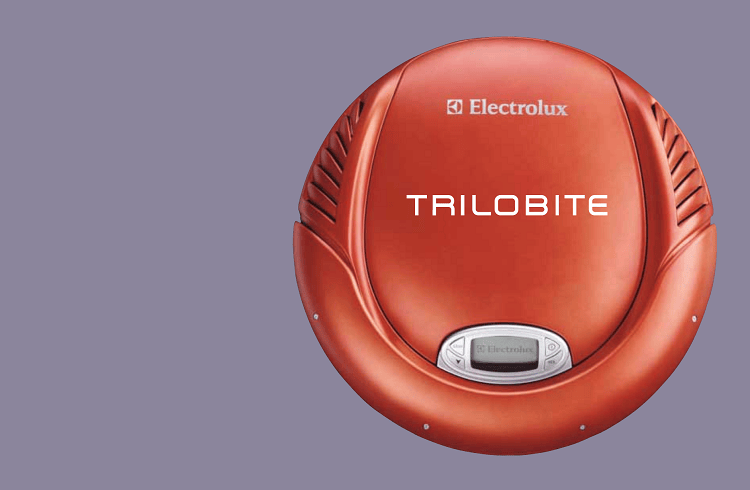
Electrolux Trilobite (1996)
Demonstrated in 1996 but not released until 1997, this 5kg robot proved that technology was close to being able to automating much of vacuuming, but not quite there yet. When I first tried a robot vacuum in 2016, it was far less expensive, lighter, better at mapping and much better at vacuuming, but despite everything, was still nor really ‘there yet’ in terms being either a practical alternative to either paying a cleaner, or reducing the vacuuming to being done automatically so that doing it yourself was almost as good.
Comparing later models, the pace of advancement is accelerating. It seems there was less advance between the Trilobite in 1996/7 and the Samsung in 2016, than between the Samsung in 2016 and the Deebot in 2021.

Samsung R9350 (2016).
I purchased the Samsung 9350 in mid 2016, about 5 years prior to replacing it with the Deebot T9. In the 3 years prior to the demise of the R9350, it had rarely been used, due to our moving to house with multiple levels which made the R9350 more difficult to use. Even in a house with only one level, the R9350 was borderline between novelty and truly useful. On the two usefulness tests,
During times when we were working long hours, the amount of work still required using the robot meant that vacuuming was another task assigned to a paid cleaner. If the robot did sufficient of the vacuuming purely automatically, the cleaner would have been relegated to only the remaining tasks, but in the end, for the period of time we made use of a cleaner, we had them do the vacuuming.
During times we were not using a cleaner, we did use the R9350, but the payback over doing the vacuuming with a traditional vacuum was marginal. Why:
- The R9350 would not navigate between the legs of chairs in the dining area, meaning it was necessary to prepare the area by lifting chairs onto the table before vacuuming, otherwise the unit would most often get stuck.
- We had several mats at key traffic areas, and the mats had to be moved outside prior to vacuuming as the robot would tangle in the mats.
- Lack of obstacle avoidance beyond ‘bump’ detection, meant many objects had to be moved prior to vacuuming.
- The R9350 would occasionally get ‘lost’, and need to be restarted, and could only start a full mapping based vacuum from the base station.
- The R9350 would get ‘stuck’ or lift itself on some occasions on some furniture.
After a period of several months between uses, I tried the R9350 again and discovered one of the wheel motors would not turn. Despite the vacuum having a ’10 year motor warranty’ on the main vacuum motor, the robot would need a paid repair.
Enter the Deebot T9+.
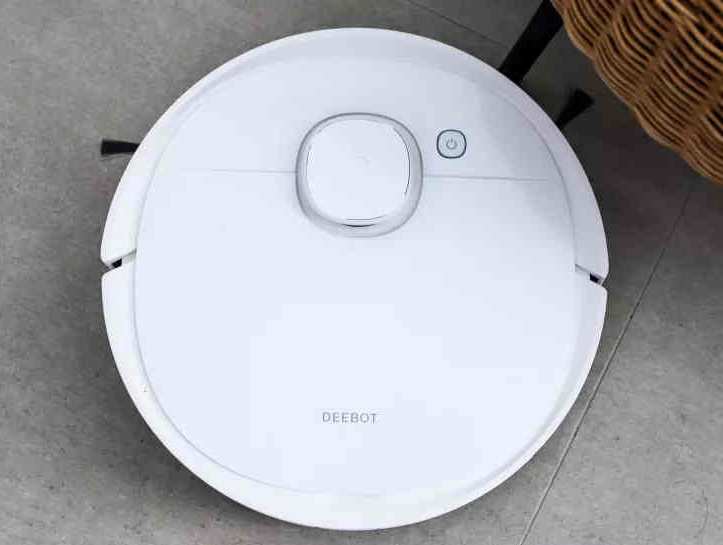
Prior to purchasing the Deebot T9, I found it extremely difficult to determine how well any of the robot vacuums I was contemplating would operate when used in a house with multiple levels, as discussed below. The best help I found was reddit post, and that was still unclear. There were reports of needing a base station for each level etc.
The two new features requires were, obstacle avoidance that prevented the robot getting stuck, and mapping that worked well even with multiple levels.
Five years makes a huge difference to the robot function. The obstacle avoidance of the Deebot and improved robot navigation makes a far greater difference than I expected, and the all ‘novelty factor’ is gone from having a robot vacuum. The T9 basically does not get stuck. No moving chairs other preparation required, and some suggest it is the first robot vacuum they found that recognises cables. There are still many things the future robots could improve on, but at this time, in mid 2021, the robot vacuum has genuinely ‘arrived’.
Review Of the Deebot T9+
Yet Another Review?
There are already lots of reviews on robot vacuum cleaners but people who compare many robots, but reviewing lots of robots have plusses and minuses. Such reviews can really help chose which robot, but they are less useful in deciding how to live with the chosen robot. I plan to add tips and problem solving on the T9+ to this review and as a s ‘one off’ review can fill in the gaps, and correct errors that result when reviewers are dealing with many robot vacuums. The plusses and minuses of these reviews are:
- Pluses:
- Provide info on a wide range of models to which they have access.
- Enable direct comparisons and may have measuring tools.
- Minuses:
- They testing all the robots in one somewhat artificial environment which may not match your home.
- Reviews tend to assume each robot is similar to others they have tested and can miss points of difference .
- Points that only become clear after living with the robot for longer than just a test may go unnoticed.
- not guidance on use of robot vacuums across multiple levels.
In summary, this review is only an additional resource, not replacing comparison review. But even very good reviews such as this one by techradar, miss the following:
- their ‘best robot vacuums’ list does not include robots such as the T9 as it it recent and not available in all markets at this time.
- the washable mopping pads from the T8 also work with the T9 and provide an alternative to disposable mopping pads, and eliminate their ‘on going costs’ problem, especially if, as they recommend, the air fresheners are not used.
Deebot T9+ vs T9: The Auto Empty Base.
The T9+ is the combination of the T9 robot and an auto empty base. Having an auto-empty base reduces the number of times dust must be emptied.
In theory, the robot could operate for one month without being manually emptied. However, if the dust bin within the robot becomes full of dust or picks up some moisture as when cleaning a bathroom or laundry floor, then the auto-empty process will fail, and the robot will need to be manually emptied.
In practice, given the long-life battery of the T9, at least when the battery is relatively new, enables cleaning a large area without returning to base, in homes with a large area it would be expected that the auto-empty would fail often, due to the robot having no way of detecting the internal dust bin is getting full and the robot should return to auto-empty. Using ‘area mode’ for scheduled operation could limit area size such that the bin will not become too full.
Also note that emptying the dustbin manually will normally spill dust, and with no ‘spot vacuum’ mode appropriate for cleaning vacuuming such a spill, it is best to take the robot outside to empty the dustbin manually.
The auto-empty base is definitely good to have, but having the base may not allow a month of automatic operation as the roller and rotating brushes will need to be cleaned of hairs relatively often even in a pet free house. In practice, it can be necessary to manually clean the rotating brushes and main roller even after every use, somewhat limiting the value of the auto empty functionality, as if the robot needs manual attention to clean the roller, then manually emptying is not a very significant extra step.
Multilevel with the T9+.
With the T9, I moved the base to each level for the first run on each level, when the initial map is built. Starting on a new level, the robot would automatically detect it was in a new area, and each time build a new map, and each new map could be saved and named after each area was mapped. You cannot tell the robot in advance it is about to start on a new level, leaving the robot to automatically detect the new environment is the only way to start a new map.
Having mapped all areas, the auto-empty base can then be left at one fixed location within the home. On the level where the base resides, the robot can operate scheduled vacuum runs completely unattended. To vacuum other levels, all that is required is to carry the robot to other level and push start. The robot will normally automatically detect the which level it is on by ‘locating’, and then be ready to vacuum that area. However, there is no way to manually tell the robot which level it is on, which is a software limitation that you would hope will one day be fixed.
If starting vacuuming by the button on the robot and not the app, you may find the robot did not detect the correct level. On the app you can press the crosshairs symbol next to the name of the map on the ‘smart cleaning’ screen, which gets to ‘relocate’, and verify it has detected its new position. I have only once experienced the robot failing to locate itself, and on that occasion, I had to try placing the robot in about four different locations on the new level before it finally detected where it was correctly. Better software telling the software the robot was on a specific already mapped level, giving the robot a far better chance to be able to then determine where exactly it was located, and perhaps even allow the robot to hunt for a ‘landmark’.
Competitors.
Feature Set: Object recognition, LIDAR, Mop function, Auto-Empty, good battery and strong suction.
I wanted a robot that had both reliable mapping and object recognition. Robots that only detect objects by bump sensor will push and run over light objects, only to then get tangled. The main competitor robots with object detection in May 2021 were:
Roborock S6 Maxv, S7.

Some consider models by Roborock and Ecovacs (makers of Deebot) as the titans of robot vacuum makers, as iRobot is yet to release a robot with object detection. However as per the cartoon to the left, although the Roborock S6 was available with object detection of a similar level to the Deebot T8, at the time I am writing this, the newer S7 model is not available with object detection. When the S7 is available with object detection, it could be a better choice than the T9, as the S7 has an auto-lift mop, which allows automatic switching from vacuum only to mop mode, a feature the T9 lacks. At this time, the older S6 model that does have object detection, has no pluses relative to the newer Deebot T9 other than it may be available at a lower cost, but does fail to match the T9 in battery life, suction, moping, and obstacle avoidance. A future Roborock T7 Maxv model should be worth considering if and when it is available.
iRobot Roomba S9+
iRobot builds quality Robots, but you pay more than with the Chinese brands. By comparison there are pros and cons, but overall, at the time of writing iRobot is comparatively a generation behind the leaders.
- Pros.
- Maintainable.
- Well Built.
- Will push chairs.
- Detects Dustbin full.
- Cons.
- Cannot detect objects.
- Gets stuck.
- Runs over cloths, and then breaks its wheels as a result.
- Software bugs- need to delete map and lose settings when these occur.
When iRobot adds object detection, then they will again have a completive product, but even then it may come down to a question of price.
Mopping.
I am still somewhat ambivalent about mopping. Various reviews state the T9+ is more effective at mopping than even the Roborock S7, but like all robot mopping systems, it still does not do it all. There will still be spots where something sticks to the floor, and the robot can neither detect nor remove that spot.
Unlike some earlier robot vacuums with a mopping feature, the T9 actively vibrates the mopping pad and as result can do reasonable job of mopping, but since none of these robots is a wet vacuum, they do not use enough water to match a manual mopping of the floor. Of course, you could have them mop far more often.
Practicality, tips, lessons from ownership.
Spot Cleaning.
With my original R9350, the remote would highlight a spot on the floor like a laser pointer, and provided the robot was close enough, it would detect the highlighted point and go to that location, but it did not then automatically trigger cleaning around that location. The Deebot T9 has not spot clean, and neither do most of its rivals such as the Roborock. Roomba models can be told to clean the area where they have been placed, but the cannot detect what size area to clean.
Full Dustbin.
Neither Deebot nor Roborock models have a system for detecting their internal dustbin is full. If the internal dustbin does get tightly packed from being very full, auto-empty fails.
For any areas that often becomes very dusty, it is best to divide that area into two, and set the robot to vacuum as two separate areas, allowing a return to base to empty between runs.
Hairs.

Hair still must be removed, and particularly can collect on the ends of the main roller.
Hair also can become caught around the two edging brushes, which need to be removed in order to be cleared of hair that has been collected. Some alternative vacuums use rollers without bristles, but this would not prevent hairs becoming caught at either roller ends or by the side brushes.
No pets here, and few people in the house, but still there are hairs.

