
Episode 1 stated now could be a bad time to invest in technology and buy a new computer. Apple has announced they are moving to ARM CPUS, which will mean replacing their products, and this episode explores why it is so critical to Microsoft that they also move to ARM, and what the multiple technology award winner Linus Torvalds has to do with the reasons, and how it could so fundamentally change the technology industry.
- ..Last time … : Apple Transitioning, Microsoft Maybe?
- Insight From Linus Torvalds.
- Another Win for Apple?
- ARMing The Cloud: Amazon, Microsoft, Google?
- Implications for Microsoft: ARM or bust.
- In coming Episodes:
- What are RISC and ARM?
- Can the Empire Strike Back?
- Amazon & Google.
- Gaming Computers & Workstations.
- Dell, Hp, Asus etc.
Last Episode Recap: Apple Transitioning, Microsoft Maybe?
Last Episode reviewed where Apple and Microsoft were with their ARM transitions, and what a transition means in terms of business models, but although Apple has declared their transition, despite all the evidence of what is happening with the Surface Pro and Pro X, it could be said that there is no clear indication of what Microsoft plans.
Apple transitioning computer chips feels like déjà vu. From the 6502 in first Apple computer in 1976 and Apple II models that followed, then the Motorola 68000 introduced with the Lisa in 1983 and the Macintosh computers, the move to Power PC chips in 1994-1996, then the move to Intel in 2005. Apple moving is nothing new, and when Apple moves, announces it and does it. But Microsoft, does not control its ecosystem in the same way, and no move has ever happened so far.
But the industry is changing, and so is Microsoft.
Insight From Linus Torvalds.
You could read this article on “What Linus Torvalds really thinks about ARM processors“, as it is a quite useful full explanation, but I will also give a summary. When asked about whether ARM processors would take over for Linux, Linus said that developers prefer to run their applications on the same type of processors as they use in their own environments, so even if ARM processors have advantages, the demand for ARM servers will not rise until developers have ARM computers in their development environment.
Some people took this to mean “ARM servers will never be a big thing”, but that is not what was said, and “ARM Servers will not be a big thing until developers has ARM machines”. So far, ARM computers have not be suitable for developers, but since the time the comments by Linus were made, it has been revealed that all Apple computers will move to ARM, and many developers use Apple computers.
The key observation by Linus, is that developers prefer to develop for the processors they themselves use. Linus, is quite a heavyweight of the software industry, and his thought deserve serious consideration.
Another Win for Apple?
Apple is not really a serious player on computer servers, so you may think the words of Linus are relevant to them, but wait. Where does Apple earn most revenue? From iPhones and iPads that all use ARM processors. Developers for Apple mostly use Apple computers, and some development features require use of Apple computers for developing an App that can be approved on the Apple App store. Given that developers can chose what platform target their apps to run on, the most profit for Apple will come if every incentive possible provided to have iPhone and iPad as a target, and as pointed out by Linus, that result requires developers have ARM computers. In terms of the bottom line, this is probably the most compelling reason for the more by Apple to ARM. I have seen arguments that Apple should have chosen RISC-V over ARM for their computers, but that argument misses this biggest commercial motivation for the move to ARM.
ARMing The Cloud: Amazon, Microsoft, Google
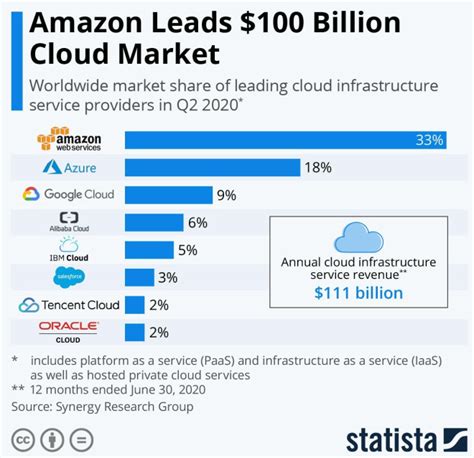
One of the biggest, and perhaps the biggest advantage ARM has over Intel is lower power consumption. This is important for phones, because they run on batteries. This is important for severs, because they are used in huge server farms with significant electricity usage. The more power the CPU uses, the more heat generated, which also increased the power used by cooling. The cost is significant, and in world where server companies want to tout their green credentials, there is more than just the cost at stake.
Last year, Amazon announced the launch of its ARM-based processor called Graviton which was optimized for performance and cost. According to a source who spoke to Reuters, the new processors are at least 20 percent faster than this first-generation ARM chip. ….
The new Amazon chip hasn’t been officially announced yet, but it is expected to use ARM’s Neoverse N1 technology and to have at least 32 cores, twice as many as the previous ARM chip.
Engadget,November 29th, 2019 ,
Amazon EKS support for Arm-based instances powered by AWS Graviton is now generally available
Amazon Elastic Kubernetes Service (EKS) customers can now run production workloads using Arm-based instances including the recently launched Amazon EC2 M6g, C6g, and R6g instances powered by AWS Graviton2 processors.
Amazon: osted On: Aug 17, 2020
Clearly, the leader in cloud services, Amazon, has already achieved with servers, what Apple is now doing in their computers. Built them around their own ARM based CPU that is not available to competitors. The old computer business model from before the microprocessor era has returned.
There are creditable reports Microsoft are now developing their own ARM CPUs. There are also reports of a laptop with a suitable ARM CPU from Qualcomm appearing in benchmarks, but while a Qualcomm laptop CPU could give Microsoft a serious, rather than underpowered, entry into ARM devices, it is not likely to enable competing with Amazon on servers. Qualcomm can provide a stepping stone, but the reality is Microsoft needs to also make a move of its own.
Implications for Microsoft: ARM or bust.

Microsoft is second in the world of cloud computing, behind Amazon, and ahead of Google. They are most likely the most outspoken of the three on the commitment to the environment. All this means that being ‘out-greened’ and out performed per dollar by Amazon ARM processors it not something they can afford to ignore.
The problem for Microsoft, is that with this type of technology, the player with the greatest volume has the advantage. Before the move to ARM, ths advantage in the servers themselves did not exits. Microsoft and Amazon would be paying almost identical amounts for each, basically identical server. So how does Microsoft get volume to still eat into the market share of the segment leader:
- Move Surface Products to ARM to get the benefits of combined volume.
- Leverage position in development tools to encourage ARM development, to most the maximum number of Azure apps to ARM servers and increase the ARM produce volumes for Microsoft.
- Market Microsoft ARM CPU chips available to Microsoft PC manufacturer customer base.
The first two are simple logic. The third may sound radical, but makes a lot of sense. The world has moved to being dominated by two revenue models for software:
- Best Software Models going forward.
- subscription (Office 365)
- free (indirect, usage based revenue)
- Problematic
- One Time Fee, with either no updates, or free updates.
We are moving to a world where consumers expect operating systems to be free. Normally they come with the equipment, and there is no ‘pay for a new/upgraded operating system’ option.
The revenue stream from Windows need a path to the future, and selling the chips that run the software would be one of the best paths. Overall, it is possible to catch Amazon on ARM server volume, while Amazon has the lead in overall servers, ARM servers will still be a small fraction and there are things Microsoft can turn to their advantage.
The Consequences For Microsoft Of Not Migrating to ARM.
In reality Microsoft does not need to completely migrate to ARM, but they must at least partially migrate to ARM, and once partially migrated, if would be less costly to complete that migration.
The first consequence would be that without ARM servers, they not be able to match Amazon’s ARM servers, which would threaten Azure revenue. The ‘Linus roadblock’ of developers not having their own ARM computers to develop with, may have held things back, but is now being cleared by Apple. If Linus is correct, as ARM laptops roll-out from Apple, developers will have their own ARM environments, and ARM servers will become increasingly important.
Secondly, the entire Windows base will be at a disadvantage against Apple in being able provide computers for developers wanting to develop the more cost effective ARM server cloud solutions. The only other computer manufacturer with the second market to get ARM volume would be Samsung, and they are not a brand well established in the developer community.
Thirdly, Apple will gain an unanswered power efficiency advantage that could enable them to better compete for computers in the corporate world.
In summary three potential revenue hits for Microsoft.
Microsoft does not need to follow Apple and announce a complete shift at this time, but if Microsoft cannot release an ARM product that is a real competitor for Intel based products, will Microsoft remain the right company to buy from?
Other articles perhaps worth reading. Arm processor, The Implications of Microsoft and Apple’s ARMs Race, Not Intel and Not AMD , Intel to Acquire RISC-V company?


